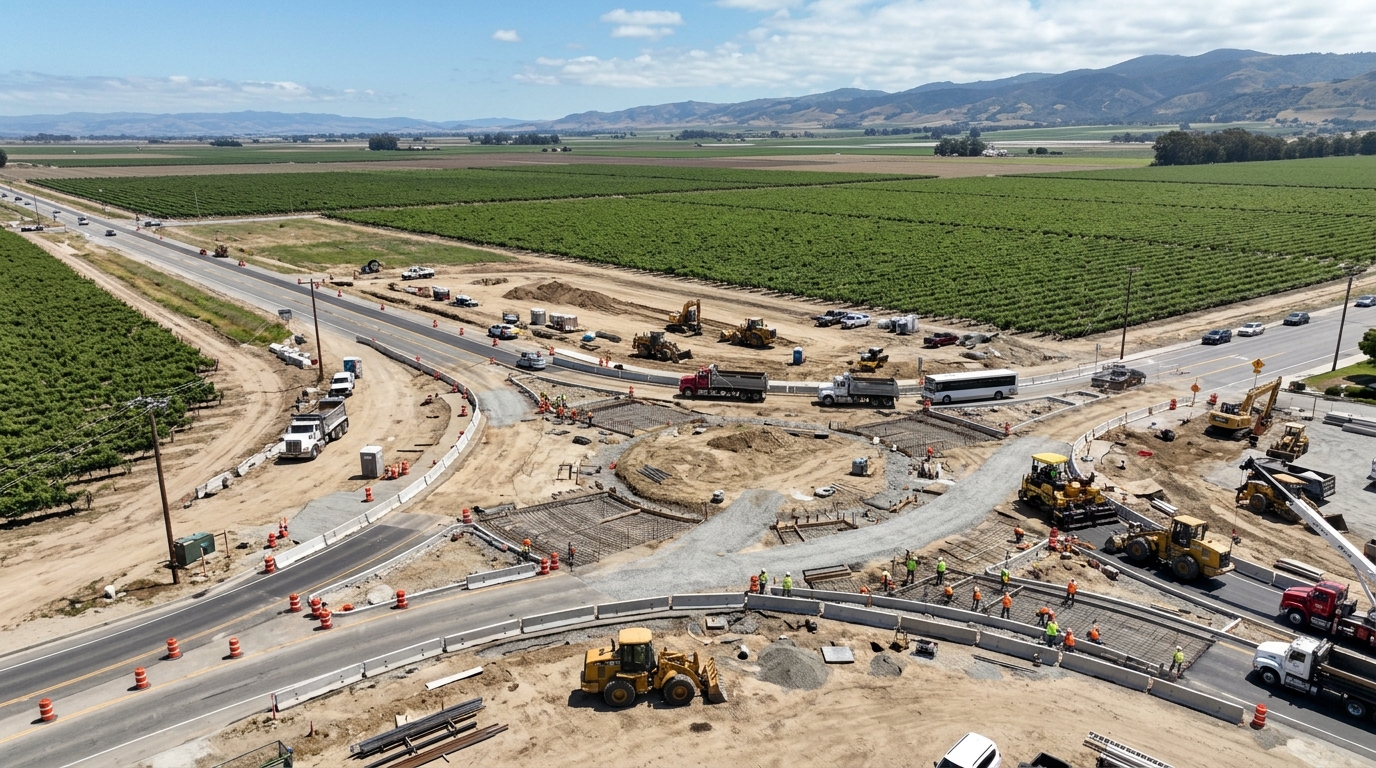
The Boronda Road Congestion Relief Project is one of Salinas’s most visible transportation construction efforts in 2026. It affects a corridor used by nearby residents, school families, commuters, transit riders, cyclists and people traveling between growing areas north of the city and established neighborhoods to the south. The work is intended to improve traffic flow and safety, but construction itself can create delays, changing lane patterns, noise and temporary access problems.
The City of Salinas currently describes Phase 1 as ongoing, with completion anticipated in late 2026. The city project page says work is in Stage 2 and identifies a closure of McKinnon Street between Boronda Road and Pennsylvania Drive. A Transportation Agency for Monterey County progress report dated February 13, 2026 also divided construction into three stages, with Stage 2 expected to finish in July and Stage 3 expected to continue through December. Because project pages and schedules can lag behind field conditions, drivers should verify the latest notice before relying on a particular closure or completion date.
This guide explains the confirmed Phase 1 scope, the difference between the active construction area and the larger long-term plan, and practical ways to travel through the corridor. Related updates will be collected in the Salinas city projects section and the parks and outdoors guide.
What Phase 1 Is Building Along Boronda Road
Phase 1 covers approximately 0.7 miles of East Boronda Road, from Dartmouth Way to about 1,200 feet east of McKinnon Street. The Transportation Agency for Monterey County describes the project as widening this section from two lanes to four and constructing a modernized dual-lane roundabout at McKinnon Street. The contract was awarded to Granite Construction Company, and construction began in November 2024.
The road widening and roundabout receive most of the attention, but the documented project includes more than vehicle lanes. Plans also identify sidewalks, bicycle facilities, accessible curb ramps, street lighting, bus pullouts, stormwater-treatment features and enhanced pedestrian and bicycle crossings. These elements matter because Boronda Road is not used only by drivers. A transportation project should also account for people reaching schools, bus stops, homes and nearby destinations without a car.
The Active Project Is Only the First Part of a Larger Plan
The city’s overall Boronda Road concept extends from east of Dartmouth Way to east of Independence Boulevard. It calls for four travel lanes and multi-lane roundabouts at McKinnon Street, El Dorado Drive, Natividad Road and Independence Boulevard. Phase 1, however, focuses on the McKinnon Street area and the adjoining section of Boronda Road.
Future Roundabouts Are Not All Under Construction Now
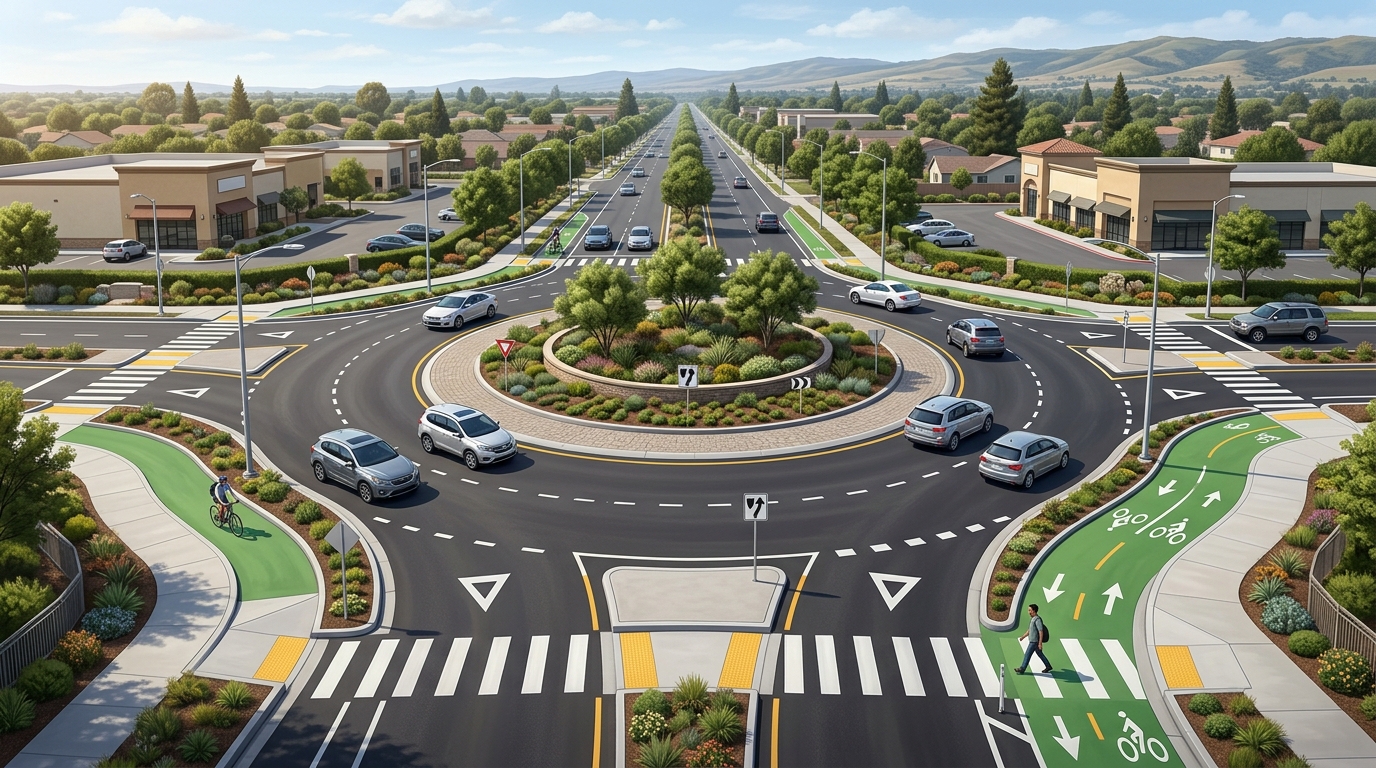
It would be inaccurate to say that all four roundabouts are being built as part of the current contract. The city states that future phases depend on funding availability and the completion of required environmental permits. Until a later phase receives its own confirmed construction notice, residents should not assume work has started at the other planned roundabout locations.
Residents should therefore separate three different ideas: the overall corridor vision, the current Phase 1 construction contract and later phases that still require funding, design or permitting. That distinction is especially important when discussing planned development north of Boronda Road. A long-range improvement can support future growth without every segment being ready at the same time.
Roundabouts Change How Drivers Use an Intersection
A dual-lane roundabout requires drivers to choose the correct approach lane before entering, yield to traffic already circulating and follow lane markings through the intersection. Drivers should not stop inside the roundabout unless traffic conditions require it, and they should avoid changing lanes suddenly while circulating. Large vehicles may need additional space, including the truck apron around the center island.
The final markings and signs should be followed rather than assumptions based on other roundabouts. Construction conditions may also differ from the finished layout. Temporary signals, barriers and flaggers can control traffic while the permanent intersection is incomplete, so drivers should not try to navigate the work zone as though the roundabout is already operating normally.
For another example of how Salinas Stories distinguishes an active project from completed public access, see the Closter Park revitalization guide.
Why the Project Is Being Built in Stages
The February 2026 progress report divided Phase 1 into three major construction stages. Stage 1 covered widening on the north side, including new pavement, stormwater facilities, accessible ramps, sidewalks, bicycle lanes and street lighting. The report described that stage as substantially complete. Stage 2 moved construction to the south side, while Stage 3 was planned for the middle of the roadway.
Staged construction allows traffic to continue while crews rebuild different parts of the corridor. It also creates repeated changes in lane alignment, barriers, pedestrian routes and access points. A route that worked one week may be altered later, even when the overall project remains on schedule. Weather, utility conflicts, inspections and change orders can also affect the sequence.
The Published Cost Is Not the Same as the Final Total
The Transportation Agency for Monterey County progress report lists an original cost estimate of $15,637,796.93 for Phase 1. Later agency records say the project used its competitive Regional Surface Transportation Program funds by October 2025 and received additional funding to address cost overruns. The city also lists Measure G, development fees, gas-tax revenue, Measure X, regional transportation funding and air-district funding among the project sources.
Those records confirm that the project uses several funding streams, but they do not provide a single final completed cost. An original estimate, a construction award, a funding authorization and final expenditure are different figures. Change orders may cover unforeseen field conditions, design revisions or other contract work. A final cost should not be published until a current city or agency financial record identifies it as such.
How to Travel Safely and Follow Reliable Construction Updates
The most useful travel advice is to assume that conditions can change. The city project page currently identifies Stage 2 and says McKinnon Street is closed to vehicle and pedestrian traffic between Boronda Road and Pennsylvania Drive. The city also held a Stage 3 community meeting on June 10, 2026. That meeting shows that the next stage was being discussed, but it does not by itself prove that every Stage 3 traffic pattern is already in effect.
Before a school trip, appointment or time-sensitive commute, check the official Boronda Congestion Relief Project page and the city newsroom. Look for a publication date and a precise description of the affected intersection. An old closure notice may remain online after conditions have changed.
Practical Advice for Drivers, Pedestrians and Cyclists
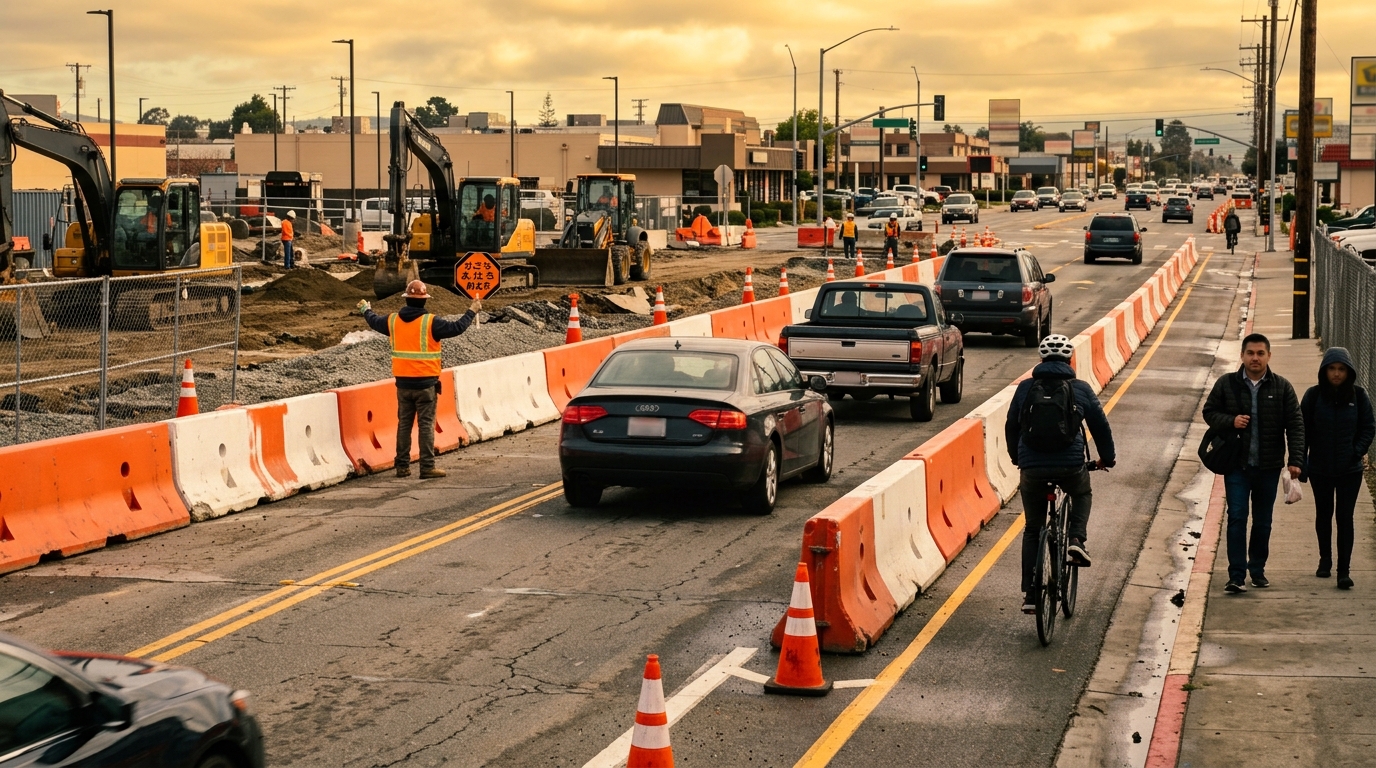
Drivers should reduce speed before reaching the work zone, leave additional following distance and expect trucks or equipment to enter the roadway. Temporary lanes can be narrower or shifted, so phone use and last-second lane changes are especially dangerous. School drop-off and pickup periods may create additional congestion near McKinnon Street.
Pedestrians should use only designated open routes and should never walk around a barrier into an active work area. A familiar sidewalk may be temporarily unavailable. Cyclists should follow posted detours and avoid assuming a partially built bicycle facility is open. Transit riders can check Monterey-Salinas Transit information when construction affects a stop or bus pullout.
Do Not Treat an Expected Completion Date as a Guarantee
The city currently says Phase 1 is anticipated to finish in late 2026, while the February progress report used December 2026 as the construction end date. Both are projections. Final paving, striping, signals, lighting, landscaping, inspections and corrective work can affect when every feature is ready.
The safest wording is that construction is expected to continue through late 2026 unless the city publishes a revised schedule. When the project reaches completion, residents should look for an official notice rather than judging from the removal of a few barriers. A roadway can appear nearly finished while crews are still completing safety systems or closing contract items.
Salinas Stories will update this guide when the city confirms a stage transition, major closure change or final completion. Our approach to dates and changing public records is explained on the sources and fact-checking page. Readers can also compare the process with the Skyway–Alisal roundabout monument guide, which similarly separates approved plans from completed work.
The Boronda Road project is designed to create a wider, multimodal corridor with a new McKinnon Street roundabout and supporting pedestrian, bicycle, transit, lighting and stormwater improvements. The immediate inconvenience is real, especially for people who travel through the area daily. The accurate 2026 takeaway is equally clear: Phase 1 remains an active construction project, later corridor phases are not all funded or under construction, and current city notices should guide every trip through the work zone.